when writing to whom it may concern what is capitalized
Main To Whom It May Concern Takeaways:
- To Whom It May Concern is a salutation. The salutation of a letter gives writers a run a risk to gear up the tone of your correspondence.
- Capitalize the letter of each word, then follow the phrase with a colon.
- To Whom It May Business organisation may also be written as To Whom This May Business.
- Alternatives include Dear, Hello, and Greetings.
- There are pros and cons to using a generic greeting. It tin minimize the risk of misspelling a name or incorrectly identifying gender. On the other hand, it can sound impersonal and imply laziness or a lack of care.
- To Whom It May Concern is advisable for formal correspondence when you lot don't know who the recipient is. This includes letters of reference, initial contact emails, and when prospecting.
You should always practice everything you tin to detect out the recipients name and contact information. However, when this isn't possible, use To Whom It May Concern. We'll evidence you how to correctly utilize this salutation and wait at sample letters with To Whom Information technology May Business organisation in activity.
What is the Right way to Write To Whom It May Concern?
Always capitalize the showtime letter of every word. And so, add a colon at the end of the phrase, right after the word Concern. Next, double-space before beginning the balance of your letter.
Using To Whom It May Concern Correctly:
- Capitalize the first letter of every word.
- Punctuate it with a colon after following Concern. If yous're working with a particular style guide, be sure to consult information technology for specific rules. Some phone call for a comma instead of a colon.
- Double-space earlier starting the torso of your letter.
Example Letter Using To Whom Information technology May Concern
To Whom It May Concern :
I recently purchased a pet harness from your company'due south website, and the strangest thing happened. It arrived damaged, simply the harm didn't appear to be from a shipping problem. Rather, it seemed to be chewed up. I am hoping you tin can aid me with this, either through a replacement or a refund. I'd also honey to understand how this happened!
Best Regards,
A Disappointed Canis familiaris Owner
What is the Meaning of To Whom It May Concern?
This is a traditional salutation found in formal or professional correspondence. To Whom It May Concern is usually used when yous aren't certain of the recipient'due south proper noun or who the recipient might be. Basically, it means that you are addressing whoever is responsible for what your letter is about. "It" refers to what your alphabetic character is near. "To Whom" and "Concern" refer to the person responsible for (or concerned with) your query. "May" refers to the fact that you're non sure who is responsible for your query.
Some feel that this common salutation is condign obsolete. Similarly, others feel it sounds besides impersonal and fifty-fifty stuffy. Still, many letter writers wonder if this classic greeting is even so appropriate and effective to use.
Is To Whom It May Business organization Rude?
No, information technology'south not rude to use "To Whom It May Business concern" in your encompass letters, proposal messages, and other correspondence. That'south because this salutation works well when you are unsure of the recipient'south name and want to come beyond as respectful.
With that said, "To Whom Information technology May Business organisation" may non exist the ideal salutation in specific contexts. For example, it'southward acceptable to apply the salutation when lodging a customer service complaint.
Meanwhile, using "To Whom It May Concern" in your cover alphabetic character may make it come off as bland. So, while using information technology is appropriate in certain situations, when you lot take a specific name that you lot can address, it is best to do so.
When It's Okay to Use To Whom Information technology May Concern
To Whom It May Concern can still be useful at times. Information technology'southward appropriate to apply this generic greeting in:
- Letters of reference or introduction.
- Initial contact forms or emails.
- Comprehend letters for Resumes.
- Prospecting messages.
- Whatever correspondence where multiple recipients will receive the aforementioned letter of the alphabet.
- Any time yous are non sure who the recipient is.
Should I employ To Whom Information technology May Concern?
If you don't who the recipient is, using To Whom It May Concern is fine. Alternatives include Greetings and Honey. Apply these alone or in combination with the person'south job title or department. However, it all comes down to style and context. On 1 hand, To Whom It May Concern is a generic greeting that helps avoid addressing the wrong person, misspelling a name, or using the wrong gender. Another benefit is that if y'all're sending the same letter to multiple people, you'll salve time researching names and changing the greeting. On the other paw, it'due south less personal and can seem old-fashioned. Or worse, information technology could come off lazy because a quick Net search or phone call could give you the information you need to create a more personal and unique impression.
It can exist difficult to showtime a alphabetic character if you don't know who the recipient is. This may happen when writing concern letters to a company, cover letters for resumes, and recommendations.
To Whom It May Concern may seem like an ideal greeting, but in that location are downsides to writing a one-size-fits-all salutation. Hither are several pros and cons of using To Whom It May Concern.
Pros:
- You won't risk addressing the wrong person, misspelling a name, or incorrectly guessing a gender.
- If you're sending copies to multiple people, you don't have to change the greeting.
- Using To Whom Information technology May Concern tin salve you fourth dimension researching names.
Cons:
- Ultimately, detractors of To Whom Information technology May Concern argue that we alive in an historic period of data, which has rendered this generic greeting obsolete.
- It's now possible to notice the names of contacts for most companies through websites and social media accounts.
- Plus, what an net search can't accomplish, a quick phone call hands can.
The proficient news is that there are plenty of alternatives for this go-to salutation.
To Whom It May Concern Alternatives
You lot've made every effort to notice the name of your contact person but in the end, you lot still aren't sure.
Merely, you lot want to avoid using To Whom Information technology May Concern. You desire to stand up out from the crowd and make a memorable but professional first impression.
Yous may likewise take tossed out the classic Dear Sirs since your correspondence could hands terminate up on the desk of a female employee. What's left?
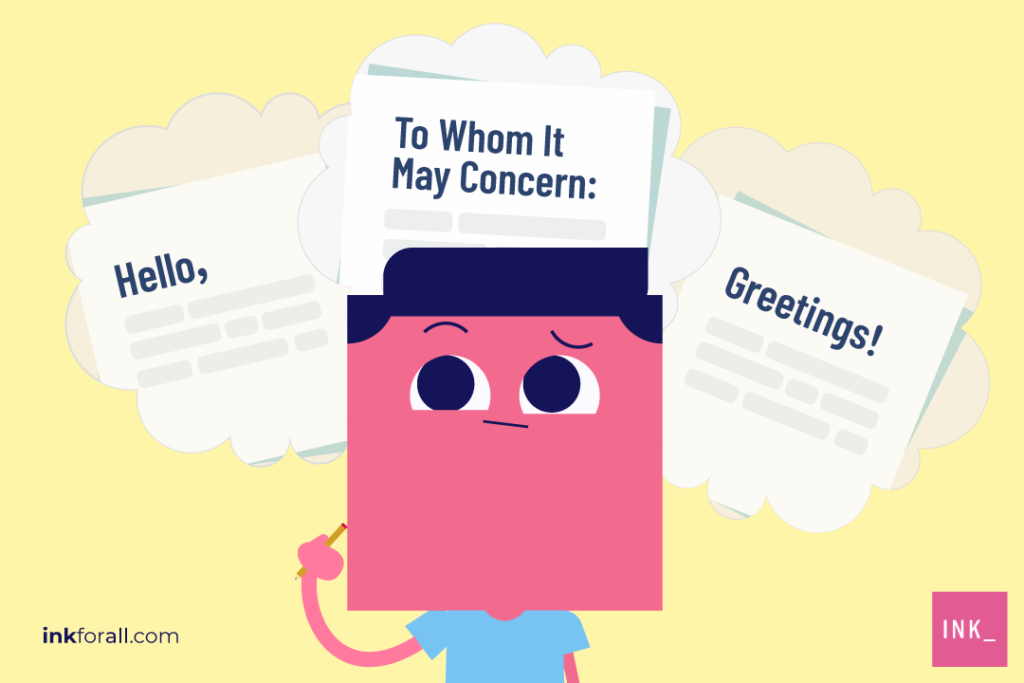
Here are the 15 best modern To Whom It May Business alternatives:
- Hullo
- Greetings
- Re: (Topic of Letter)
- Dear Sir or Madam
- Beloved [Department] Name
- Dear [Section] Manager
- Beloved Hr Manager
- Dear Human Resources Representative
- Dear Hiring Manager
- Dearest Hiring Committee
- Honey Search Committee
- Beloved Recruiter
- Honey Recruiting Managing director
- Love Personnel Manager
- Beloved Customer Service Director
All of these options imply knowledge of the recipient's name, just call up, in that location are plenty of ways to notice your addressee on the net.
Ways to Find Contact Information
- Search the visitor'due south website for your contact.
- Visit the visitor's social media or LinkedIn page.
- Accomplish out via a conversation box or direct message to ask a representative who you should be writing to.
- If all else fails, a phone call should practise the trick.
Let'south take a closer look at when and how you might use some of these alternatives.
Hello or Greetings
These coincidental salutations tin can be useful when writing breezy correspondence, such every bit emails, memos, or direct messages on social media.
Use them alone or in with a proper name, job title, or department.
Typically, identify a comma after the name or point of contact.
Some writers may opt for a colon or fifty-fifty a period or exclamation indicate to create boosted accent. All the same, ever consult the detail style guide you lot're following.
What's more, be sure to consider your audience. For example, exclamation points tin can seem very informal and are not always appropriate or appreciated.
Dear vs. To Whom Information technology May Concern
Honey is as well a archetype salutation. But, is more common in modern letter-writing use cheers to its simplicity and versatility.
To properly punctuate this greeting, use Beloved + Proper noun, followed by a comma.
There are several ways you tin can employ this traditional greeting in correspondence.
i. Dear [Name]
For informal correspondence, utilise a first name or even a nickname. For formal correspondence such as business concern letters, utilise the person's title and surname. Titles, otherwise known as honorifics, may include Dr., Professor, Mrs., Mr., Ms., Miss, and the gender-neutral Mx. If your messages are aiming loftier, your greeting may also include royal titles such as Lord and Lady.
Annotation: Using the first proper name can add together a comfortable, familiar affect to the letter and ensure that the recipient reads your words.
Note: Nicknames should only be used when writing letters to someone with whom you're well-acquainted.
2. Dear [Function], [Team], or [Department]
When writing professional letters or corresponding with companies, information technology'south adequate to address a letter to a section or the representative of a position.
By using a specific office, you can make sure your letter of the alphabet reaches the intended recipient.
Addressing a letter to a team is some other constructive mode of personalizing a letter of the alphabet without using a specific person's name.
When addressing a letter of the alphabet to a specific department, you increment the likelihood of it reaching someone in the know.
This is particularly useful when you just can't discover the name of a person or if you know the company is in transition.
The Importance of a Salutation
When you represent with a person or company, it's generally for a purpose.
Messages offer a chance to connect with potential clients, employers, or employees, and tin serve to notify recipients of wants, needs, or demands. They may also be a mode to reach out with questions of varying levels of importance.
That'southward why it's vital to get it right when you're writing a letter.
A salutation is a crucial part of any correspondence. With a single phrase, the author can set the tone for the letter of the alphabet. It's a chance to create that earth-shaking start impression.
The salutation can let the reader know whether the alphabetic character will be formal or informal, friendly, or professional person. It can create a sense of familiarity or show that the recipient is unknown to the sender.
Using someone'due south name may also be an effective way to grab your recipient's attending, making sure what'due south said next gets read. Only, when you aren't sure who the recipient is, To Whom Information technology May Concern is an ideal option.
Try This Quick To Whom It May Concern Quiz
Question #1
Right! Oops! That's incorrect.
The reply is Truthful. To Whom It May Concern is a generic salutation typically used when the writer doesn't know the recipient's identity.
Question #ii
Correct! Oops! That's incorrect.
The answer is B. Since the salutation doesn't address anyone in particular, information technology feels less personal.
Question #3
Correct! Oops! That's incorrect.
The answer is B. Y'all tin can use a colon to punctuate To Whom It May Business organisation.
Question #iv
Correct! Oops! That's incorrect.
The answer is D. All the salutations above are viable modern alternatives for To Whom It May Business.
Read More: All-time Regards and Alternatives: the Best ways to finish an Email
montanezspither90.blogspot.com
Source: https://blog.inkforall.com/to-whom-it-may-concern
0 Response to "when writing to whom it may concern what is capitalized"
Post a Comment